
Back to Everyday Curio
Tea CompassChinese tea, made approachable

How to use a gaiwan as a beginner

Understand the three pieces and practice the pour with cool water first.

Feng Huang Dan Cong

Watch a real tea lesson

Eight steps for a first gongfu session

Use a 100–150 ml gaiwan if comfortable. Start with the seller’s recipe; smaller vessels do not make burns harmless.

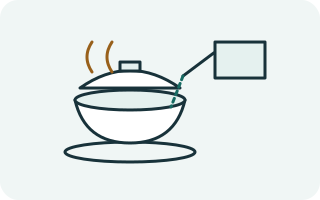
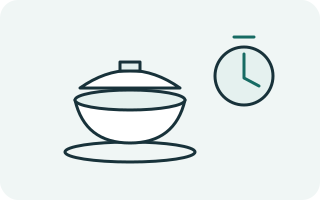
  1. Warm the vessel

    Warm the vessel

    Practice the grip with cool water first. Hold the rim and lid knob, away from the hot bowl.

  2. Weigh the leaves

    Weigh the leaves

    Start with the product recipe. An example for pu-erh or roasted oolong is 1 g per 15 ml.

  3. Rinse only if needed

    Rinse only if needed

    Follow the product instructions. A rinse is not a safety treatment or caffeine-removal method.

  4. Add water

    Add water

    Use a heat-safe vessel. Leave space below the rim; follow the product temperature.

  5. Time the infusion

    Time the infusion

    A 10–20-second first steep is an example for the recipe above, not every tea.

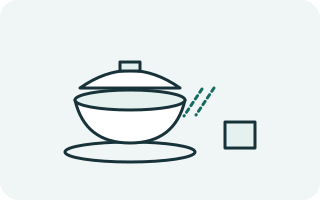
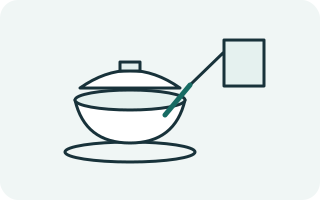
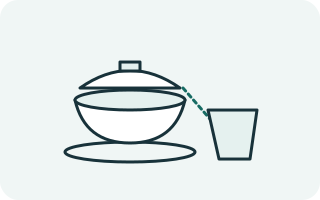
  6. Decant fully

    Decant fully

    Open a small lid gap. Pour away from fingers; a basket strainer is a valid alternative.

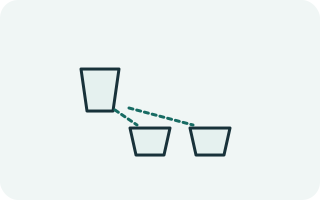
  7. Share the tea

    Share the tea

    A pitcher mixes the infusion before sharing. A tray is optional.

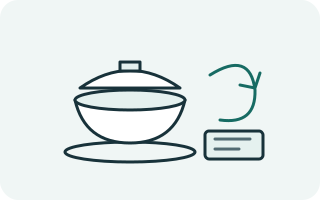
  8. Re-steep and compare

    Re-steep and compare

    Adjust time to taste. Record the recipe, aroma and mouthfeel; stop when the cup fades.

Meet the pieces

A gaiwan has a bowl, lid and saucer. A small gap between lid and bowl allows the infusion to pour into another cup or pitcher. It is optional equipment, not an entry ticket to Chinese tea.

Practice with cool water

Before brewing, practice over a sink with cool water. Find a grip that fits your hand and tilt the lid to leave a small gap. If you cannot hold it securely, use another vessel. Hot ceramic and steam can burn.

Make a deliberate session

Follow instructions for the exact tea and vessel. Gongfu uses a different ratio and shorter infusions than a large mug. Do not put a mug recipe into a tiny gaiwan without adjusting it. Pour the infusion out fully.

Choose what you will use

A basket strainer in a mug is often simpler at work. A handled teapot may be easier to pour. Expensive clay and a full tea tray are not required for a first experiment.

Watch a real tea lesson

Gong Fu Tea|chA — What Is Gong Fu Cha

By Tea House Ghost

Watch on YouTube

Ready for a starting point that fits your taste?

Find my tea
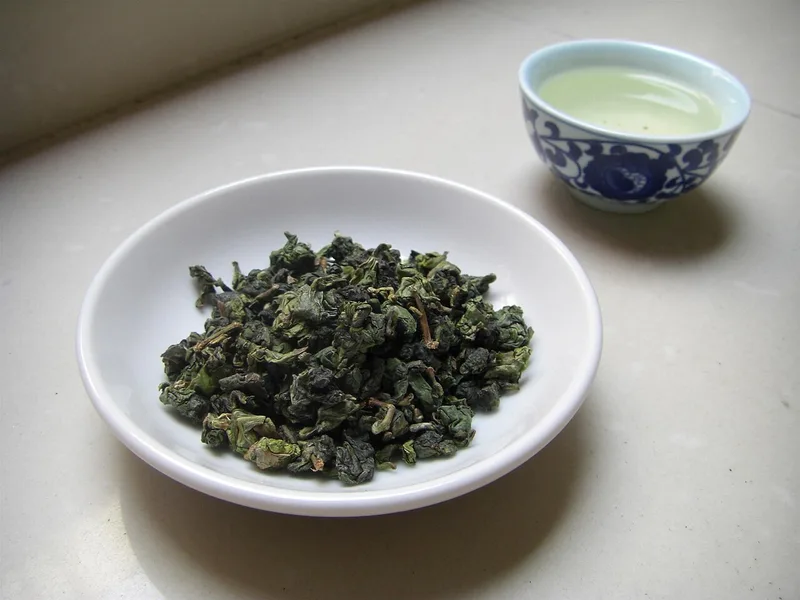
Teas to explore

Roasted Tieguanyin

A toasted oolong starting point

Roasted Tieguanyin

焙火铁观音

Bèihuǒ Tiěguānyīn

Toasted nuts · Warm grain · Orchid

Toasty and rounded, with floral notes behind the roast. Roasted does not mean smoky, and it does not mean caffeine-free.

Explore this tea
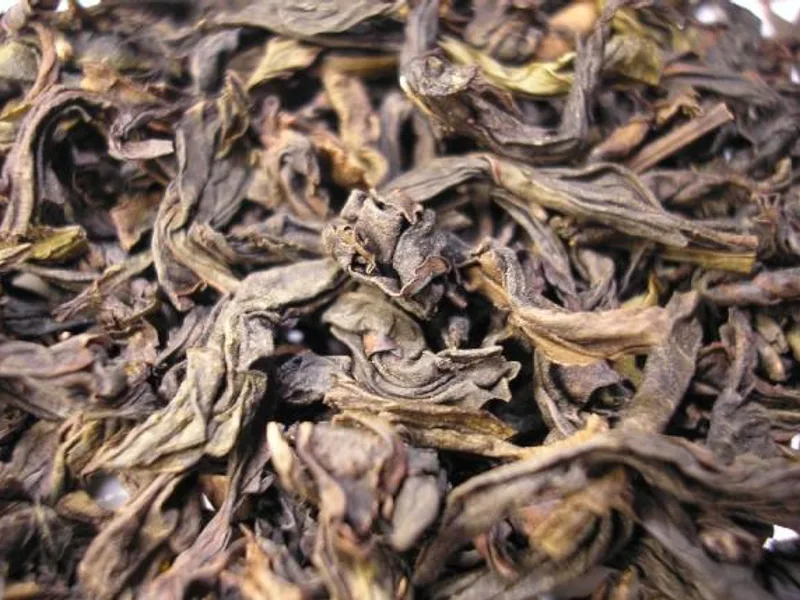
Da Hong Pao

Wuyi-style rock oolong

Da Hong Pao

大红袍

Dàhóngpáo

Roasted nuts · Wood · Dried fruit

Roast, wood and dried-fruit notes can give a substantial cup. Specific flavor and strength depend on the product.

Explore this tea