The word traveled with the drink
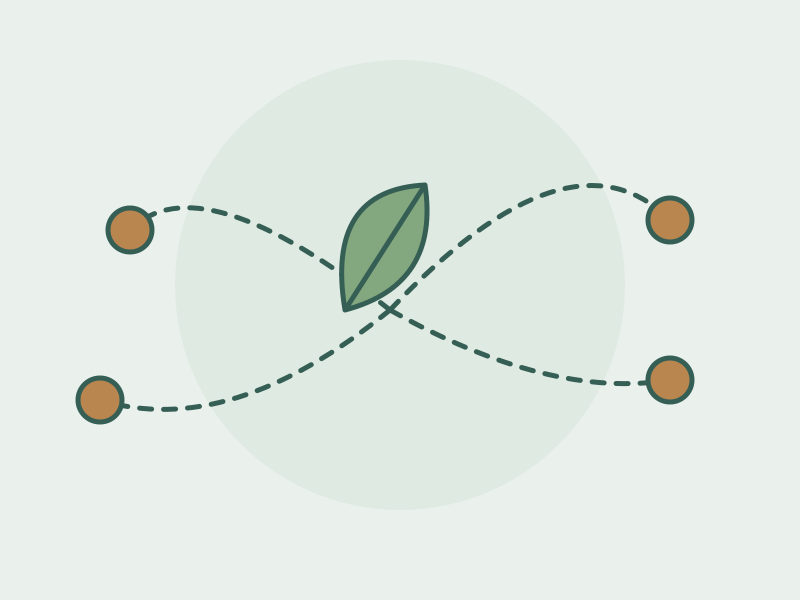
Many words for tea trace back to Chinese forms resembling either cha or te. Tea traveled between languages through trade and cultural contact, so a word’s history can reveal connections that are not obvious from a map of neighboring countries. It is a story about borrowing, not proof that one language’s tea is more authentic.
The te branch: a port and its trading partners
Dutch traders had important contacts in Amoy, now Xiamen, in the Min Nan-speaking region of Fujian. Dutch thee belongs to the branch that spread to much of Europe. English tea, French thé and German Tee make the resemblance easy to hear; Indonesian teh also reflects those long-distance contacts.
The cha branch: several paths outward
Mandarin chá resembles forms used in languages including Japanese, Persian, Hindi and Turkish. Overland trading connections helped spread chai-like forms, while other routes had their own history. The same leaf can acquire a different name as speakers pass the word from one language to another.
Portuguese shows why the slogan has exceptions
Tea by sea, chai by land is a memorable shortcut, not a law. Portuguese uses chá even though Portuguese traders traveled by sea: their connections ran through Macao rather than the Dutch trading contacts in Amoy. WALS also records words outside these two families, so the world does not literally have only two names for tea.
Why an English menu says chai tea
Chai means tea in several languages, while English menus often use chai for a spiced preparation, especially masala chai. Chai tea can therefore repeat the original meaning while still telling an English-speaking customer what kind of drink is offered. Ask about spices, milk and sweetness rather than treating the wording as a test of the café.
Use names to ask a better question
A word may name a plant-based tea, an herbal infusion or a prepared drink depending on the language and context. If you are ordering something unfamiliar, ask what leaves and ingredients are used. The name opens a conversation; the ingredients tell you what will actually be in your cup.
Ready for a starting point that fits your taste?
Find my tea