DISCOVER ·
Fruit · All notes →Why These Persimmons Get a Massage
Rows of peeled persimmons hang from poles for weeks while growers gently knead each one by hand. The massage is not affection — it is how hoshigaki gets made.
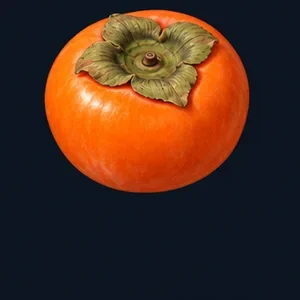
In one corner of California, rows of peeled, orange persimmons hang from wooden poles like strange laundry — and every so often, someone walks down the line and gently squeezes each fruit, one by one 1.
Nobody is comforting them. The squeezing is a job, it lasts for weeks, and it is part of the traditional method for making hoshigaki, the hand-dried persimmon that a 2004 University of California report called a vanishing craft 1.
What the massage actually does
The report describes the work precisely: each fruit is peeled by hand, hung in the sun, and massaged for the first time after four to seven days on the pole. After that, the kneading continues on a regular schedule — many growers insist on at least once a day — for roughly four to six weeks, until the fruit is ready 1.
The massage has a job description. It smooths out wrinkles as the fruit shrinks, helps moisture evaporate evenly, circulates the fruit’s contents, breaks down fibers, and helps discourage mold in the folds 1. The fruit dries whole rather than in slices; the report describes an unwrinkled, evenly dried fruit as the finest kind 1.
Not every persimmon qualifies
There is also a reason the craft starts with the right fruit. The usual choice is the Hachiya, an acorn-shaped persimmon that is famously astringent — its bite comes from tannins, which fade dramatically as the fruit ripens, which is why an unripe Hachiya can pucker your mouth while a fully soft one is sweet 1. (The squat Fuyu type is the opposite: non-astringent, and eaten crisp 1 2.) Drying is one of the traditional ways to reduce that astringency — and the result is a sweet dried fruit 1.
The frost that isn’t frost
As the weeks pass, a pale powder may bloom on the fruit’s skin. It looks like dusting flour, and it is often mistaken for mold. The report describes a characteristic sugar bloom: the fruit’s own sugars, drawn to the surface as it dries and crystallizing there 1. Mold itself is a genuine risk while the fruit dries — one reason the regular massage exists at all 1.
A craft that traveled
Hoshigaki is Japanese by origin, and in Japan the dried fruit runs deep: dried persimmons were once a staple winter food and among the oldest sweets in the cuisine, they are set out as offerings to household gods at New Year, and their wrinkled skin is said to resemble an elder’s — a wish for long life 1. Japanese immigrants carried the persimmon and the technique to California in the late 1800s. By the time UC’s 2004 report looked into it, only a handful of artisans in the state were still practicing the hand-drying method, most of them in Placer County 1.
Related drying traditions extend beyond Japan. The report notes that drying persimmons is practiced across Asia, particularly in China and Korea as well as Japan 1. If you are curious about the fruit’s other lives, our Fruit Journey project stops at China, where the persimmon keeps different stories — a different country, a different drying tradition.
About the facts in this article
- What is sourced: the craft, historical dates and cultural details rest on the 2004 UC Davis SAREP report 1; the fresh-fruit variety distinction is also supported by UC Davis Postharvest 2; the report’s own sections (summary, persimmon background, the hoshigaki craft, production system, grower profiles) are the basis for each claim.
- What is editorial: the "strange laundry" opening, "nobody is comforting them", "the frost that isn’t frost" framing and the closing comparison are our synthesis.
- The craft’s scale is described strictly as the 2004 report found it; this article does not claim current numbers, and the same report is a student research document rather than an industry census.
Sources
- UC Davis SAREP — "Hoshigaki: Preserving the Art of Japanese Hand Dried Persimmons" (2004 student research report) The craft as documented in 2004: hand-peeling, hanging, and periodic massage (first after 4–7 days, often at least daily) over roughly 4–6 weeks; the massage smooths wrinkles, evens evaporation, circulates contents, breaks down fibers and discourages mold; the fruit is dried whole; a sugar bloom can form as the fruit dries; Hachiya (astringent, tannin-rich) is the usual variety, Fuyu non-astringent; Japanese immigrants brought the method to California in the late 1800s and the 2004 report counted only a handful of practitioners, mostly in Placer County; Japanese cultural background (winter staple, New Year offering, long-life symbolism); drying traditions across Asia including China and Korea.
- UC Davis Postharvest Technology Center — Persimmon (Produce Facts) Variety and maturity background for the fresh trade: Fuyu-type persimmons are non-astringent while Hachiya-type fruit carry astringency until fully ripe, and commercial de-astringency treatments (carbon dioxide or ethylene exposure) exist separately from drying.